Step 01
Statement of entry
Three to four pages on the call you carry, the work you are already doing, and why this degree serves it. This is the heart of the review — it is read closely, not skimmed.
Everything you need to apply, by degree level — plus the proof required for an Honorary Christian Doctorate. Nothing hidden, nothing added later.
| Level | Prior education | GPA | Also required |
|---|---|---|---|
| Bachelor's | High school diploma or GED | 2.0 target | Personal statement of calling; one pastoral or professional reference |
| Master's | Bachelor's degree from an accredited institution | 2.5 target | Statement of purpose; two references; résumé of ministry or professional service |
| Doctoral | Master's degree in a related field | 3.0 target | Research or project proposal; three references; interview with the doctoral committee |
| Certificate | High school diploma or GED | Not required | Brief statement of ministry goals |
The GPAs above are targets, not cut-offs. If your transcript falls short, you are not disqualified — you apply through admission by review below.
A transcript from years ago does not measure the leader you are today. Applicants who do not meet the GPA target are considered on the strength of their calling, their record of service, and their readiness for the work. This is a full review, not a waiver — it asks more of you, not less, and every file is decided individually by the admissions committee.
Three to four pages on the call you carry, the work you are already doing, and why this degree serves it. This is the heart of the review — it is read closely, not skimmed.
Ministry records, ordination or licensing papers, employment history, certifications, or letters from those you serve alongside. Show the years behind the calling.
One letter from a pastor, ministry leader, or supervisor who can speak to your character, discipline, and readiness for graduate-level work.
A conversation with the admissions committee. Some applicants are admitted outright, some are admitted on academic probation with a required first-term GPA, and some are asked to complete preparatory coursework first.
Not every applicant is admitted this way. What we look for is evidence that you will finish what you start.
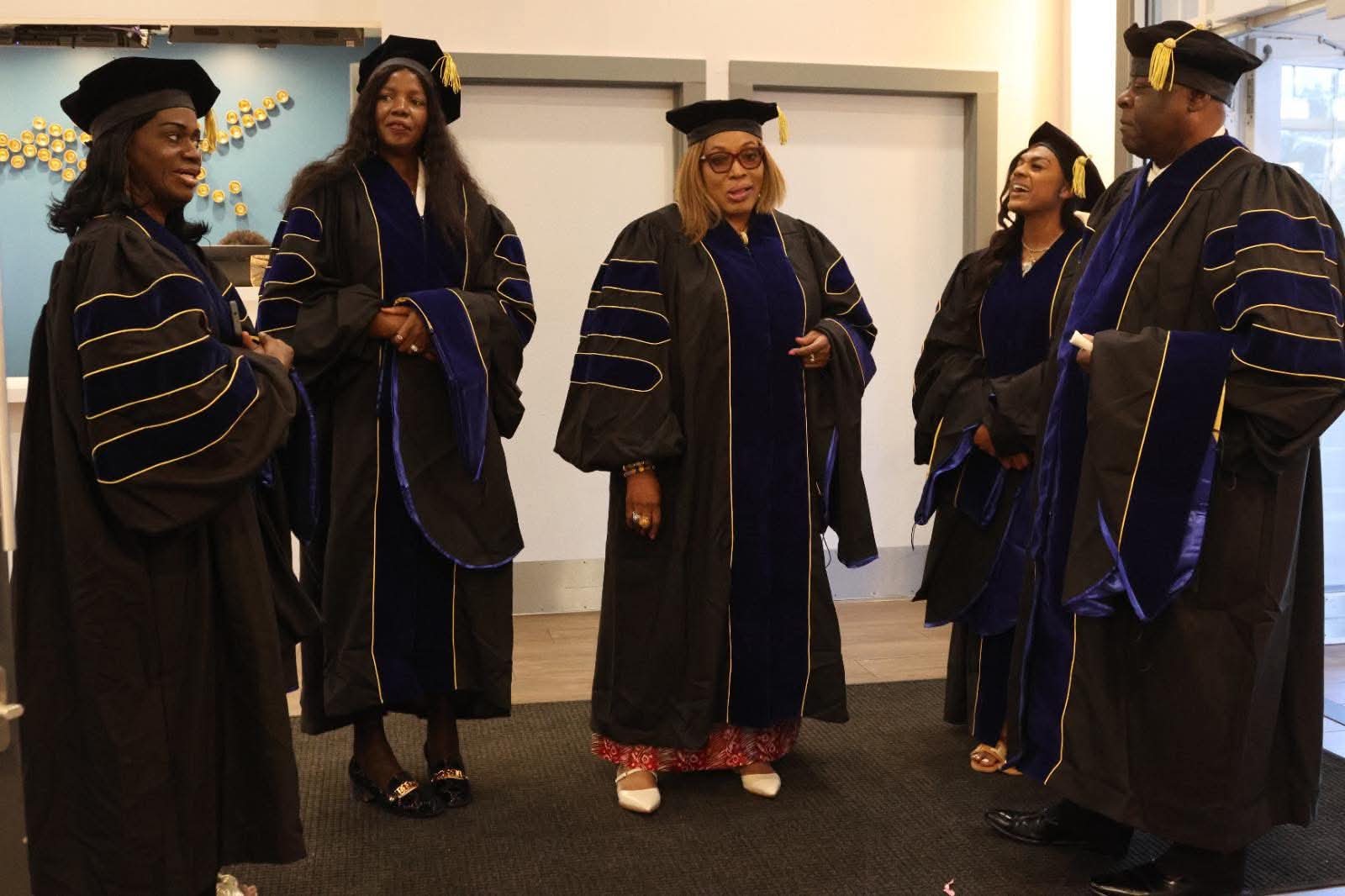
Participation in the degree ceremony requires a minimum of 20 hours of documented community service with proof. This applies to every graduate, at every level.
Required of every graduate — earned degree or honorary — to participate in the degree ceremony.
Dates, hours, and the population served, signed by a supervisor at the church, school, or nonprofit.
Submit the log to the registrar so your name is placed in the processional program.
Without the hours the credential is awarded, but walking the stage is reserved for those who have served.
Sent from every institution you attended after high school. Unofficial copies are accepted to start advising.
Driver's license or passport, used to verify identity at enrollment and conferral.
One to two pages on where you serve now and what the degree is for.
One for bachelor's, two for master's, three for doctoral — at least one pastoral.
Ordination papers, licenses, certifications, and years of service, for assessed credit.
A two-page outline of the applied dissertation you intend to pursue.
Honorary Christian Doctorates are conferred only when community action and service hours have been completed and proven. Every requirement below must be satisfied.
Community action hours logged with dates, locations, and the population served.
Signed confirmation from the organization, church, or agency where the hours were served.
Evidence of the outcome — photos, letters, program records, or press documenting the work.
Final approval by the honorary conferral committee before the degree is awarded.
If you have served faithfully over the last ten years but cannot produce a signed log for 20 hours, you may still walk the stage by submitting a referral instead. The committee reviews it in place of the service log.
A signed letter from your pastor, ministry leader, or supervisor describing the service you have given and the community it reached.
A referral form completed by a ministry leader who has known your work for at least one year, with their title, contact details, and signature.
Submit it to the registrar at least 30 days before the ceremony. Once approved, your name is added to the processional program.
Not sure whether you qualify? See how our programs work or send your background for a free credit review.
Send transcripts and your service record — we'll confirm what you qualify for and what's still missing.
Request Information